
History page 2
WOMEN’S IMPROVEMENT SOCIETY was formed, and was a conspicuous success. The Church also conducted a week of prayer towards the end of 1892, which proved to be a blessing to many.
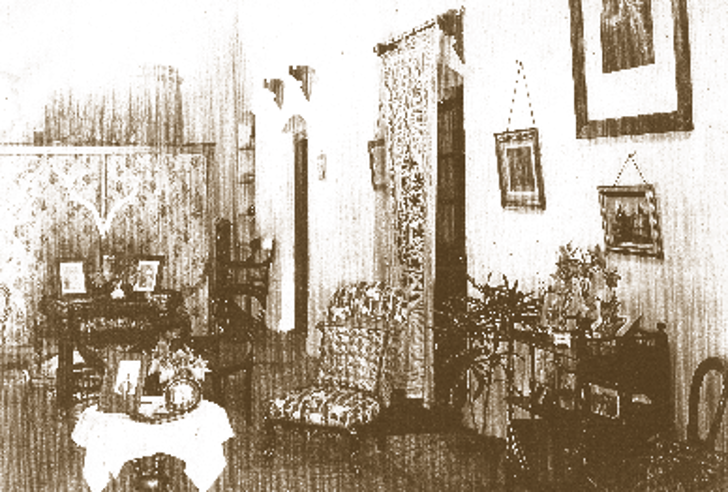
THE PARSONAGE
1893was important to the St. John’s Hill Church as in the same year in March, the Rev. Amos and Mrs. Burnet, who were in charge of the Bangalore English circuit, left for England. In the farewell address given to him at the East Parade Church, he was warmly thanked for the “genius which he had displayed in organizing and developing the English work in all its branches”. During his pastorate a beautiful church has been built at St. John’s Hill, and in the same compound a parsonage and public reading room have been erected”. (Harvest Fields 1892-1893 p.349).
Even though in the early part of 1894, our church did not have a regular pastor, the pulpit ministrations of the Rev. I. Gillings, during this period were greatly valued by
the people. The Rev. Farnell who was appointed as pastor brought with him a spirit of freshness and enthusiasm that quickened the life of the church. The involvement of the church in 1894, brisk with enthusiasm, and fervent in commitment, puts us today in the group of the “apathetic”, who need to be “quickened into life”, as a few were then. Special care and attention were devoted to the intellectual and social life of the young people of the church, who were often enrolled as members and
workers.As our members were not regular in attending Class Meetings, Special efforts were made to make them realize this “valuable means of grace”.The Y.M.C.A. adjoining the Church, continued to attract large numbers of the young, who otherwise would not have come under the care of the St. John’s Hill Church. The pastor lost no opportunity “to influence them for good”. The Young Men’s Bible class was commenced in connection with the Y.M.C.A. and was well attended.
The St.John’s Hill Church was actively involved with the work among “the poor, the aged, and with the depressed class of Eurasians, through the Poor House establishment on Haine’s Road. Feeding the needy alone was not the only service rendered, for after they were fed, they would unite together in a family worship at the Home. Poor widows were cared for in the “quarters”, provided by the Church. Mother’s meetings were held regularly every month, and were “instrumental in supplying the spiritual and temporal needs of many who would otherwise be destitute”. (Mysore District Report 1894) . The name of Mrs. King has been mentioned, for her selfless service rendered during these meetings. Our Church always had a burden to bring more people into its fold, and the members were strongly conscious of the need for hard work and continuous effort to fulfil this desire. There was however, a steady improvement, in the attendance at the services.
1895
Our ancestors in the Church made vigourous attempts during the year 1895 to interest the members in Social work. “The surrounding neighbourhood was divided into districts, and visitors appointed, who took it upon themselves to distribute tracts and invite people to the services, reporting to the pastor cases of sickness, or the presence of strangers who needed pastoral oversight.” (Mysore District Report 1895 Appendix-II).
here was a special week of prayer followed by evangelistic meetings which contributed specially to the spiritual nurture of the young. As in other English Churches, the work suffered here also because of the unsettled state of the population. Many of the most useful persons in the Church were but visitors, who stayed for a while and then moved on to other stations.
The members of the Y.M.C.A. continued their association with the Church, where they participated in discussions on religious and social questions. Mother’s meeting and Bible classes continued their good work as auxiliary aids to the work of the Church.
For the Christians of Karnataka, the name of the saintly Rev. Josaiah Hudson B.A., is that of a great Missionary Statesman, ripe in experiences and a committed


Copyright © 2018 - Wesley English Church